What is OLED Light?
OLED stands for Organic Light Emitting Diode — a lighting technology made of thin layers of organic compounds deposited on a sheet of glass. When electricity is applied, the organic layers glow evenly across the entire surface of the panel. This unique technology offers highly uniform, diffuse lighting in an ultra-thin (1mm or less) profile.
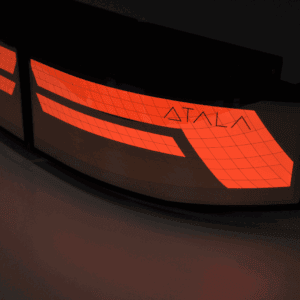
OLED lighting is seeing a wave of adoption within the automotive industry, but is an ideal solution for anywhere that uniform, thin, and energy-efficient lighting is needed.
Benefits of OLED Lighting
Beautiful Design
- Uniform, diffuse glow — no harsh spots or glare
- Flexible design with custom panel shapes and sizes
- Logos and branding elements can be patterned directly into the panel
- Can be made on bendable glass to seamlessly fit curved surfaces
Smart Functionality
- Highly reliable — passes stringent reliability testing
- High brightness capability for various daytime applications
- Dynamic segmentation for improved communication and branding
Sustainability
- Long lifetimes mean fewer replacements
- ISO 14001 certified for easy glass disposal
- High energy efficiency — reduce energy consumption
OLED Lighting vs OLED Display
While OLED display and OLED lighting share the same base technology, they serve different purposes and have some key differences:
| OLED Lighting | OLED Display | |
|---|---|---|
| Purpose | Illuminate spaces / applications | Show images or videos |
| Brightness | Very bright | Less bright |
| Lifespan | Often 15+ years | Shorter lifespan |
| Color | Usually White, Red, or Amber | RGB Pixels (Red, Green, Blue) |
| Price | $ | $$ |
OLEDWorks is leveraging our proprietary technology and decades of OLED expertise to develop longer-lasting, higher-brightness OLED display and microdisplay products.
OLED vs LED
| OLED | LED | |
|---|---|---|
| Light Emission | Surface Area Light | Many Small Diodes |
| Thickness | Ultra-thin | Bulkier due to heat sinks and other components |
| Energy Efficiency | High | High |
| Best Use Cases | Diffuse, surface applications | Directional lights — headlights, spotlights, flashlights |
OLED and LED each offer unique strengths in lighting design — OLEDs excel in diffuse, glare-free illumination, while LEDs provide powerful, directional light. By embracing both technologies, we can create a more sustainable, high-performance lighting ecosystem that leverages the best of each.
Ideal Applications
Automotive

Microdisplay

Aerospace

Machine Vision

Grow Lights